Why It Matters
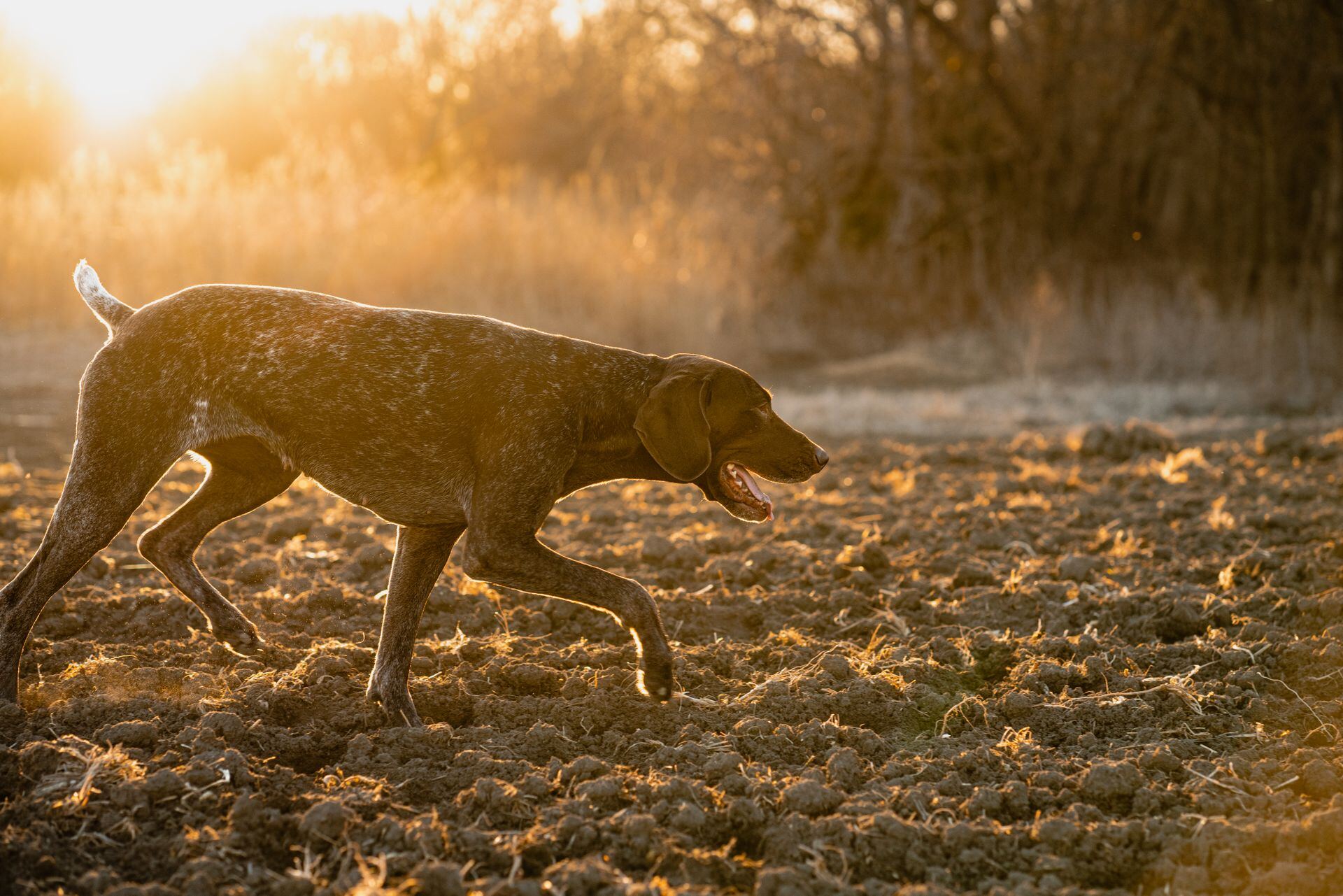
A day in the veld or on a hunt exposes a GSP to real risks — cuts, thorns, grass seeds, ticks, heat and occasionally snakes. Most of these are manageable if they're caught early, which is exactly what a basic kit and a consistent post-hunt check are for.
Neither of these replace veterinary care for anything serious — they exist to catch small problems before they become large ones, and to know when a small problem is actually a large one.
The Principle
How To Do It
- Carry a basic field kit: clean water, saline, gauze, bandage material, a cohesive wrap, blunt-tip scissors, a tick tool or tweezers, a veterinary-approved antiseptic, a towel, emergency contact numbers, and the dog's identification.
- Run a full post-hunt check every time: ears, eyes, nose, mouth, paws and pads, armpits, groin, and coat — feeling as much as looking, since grass seeds and ticks are easy to miss by sight alone.
- Check specifically for grass seeds between toes and in ears — they can burrow and cause serious problems if missed.
- Remove ticks promptly and correctly with a proper tool, not fingers alone.
- Watch for signs of heat stress on hot days — heavy panting that doesn't settle, wobbliness, gum colour changes — and treat as a veterinary emergency, not something to wait out.
Common Mistakes
- Skipping the post-hunt check because the dog 'seems fine'.
- Using human medication on a dog without veterinary instruction.
- Missing grass seeds because the check was visual only, not by touch.
- Underestimating heat stress risk on a South African summer hunt day.
- Not knowing the nearest emergency veterinary contact before heading into the field.
When To Move On
This is a standing habit, not a stage you graduate from — run it after every field session for the life of the dog.
Snakebite is a real risk in South African veld. If you suspect a snakebite, treat it as a veterinary emergency immediately — do not attempt home treatment, and keep the dog as calm and still as possible en route to a vet.
Health event · Screening/finding · Date · Veterinary follow-up notes
Anything found on a post-hunt check — a tick, a cut, a suspected grass seed — is worth logging against your GSP's Health + Genetics phase, especially if it recurs.
Sources
Disclaimer: This is general field-safety guidance, not veterinary advice. For any suspected snakebite, heat stroke, serious injury or illness, contact a veterinarian immediately.