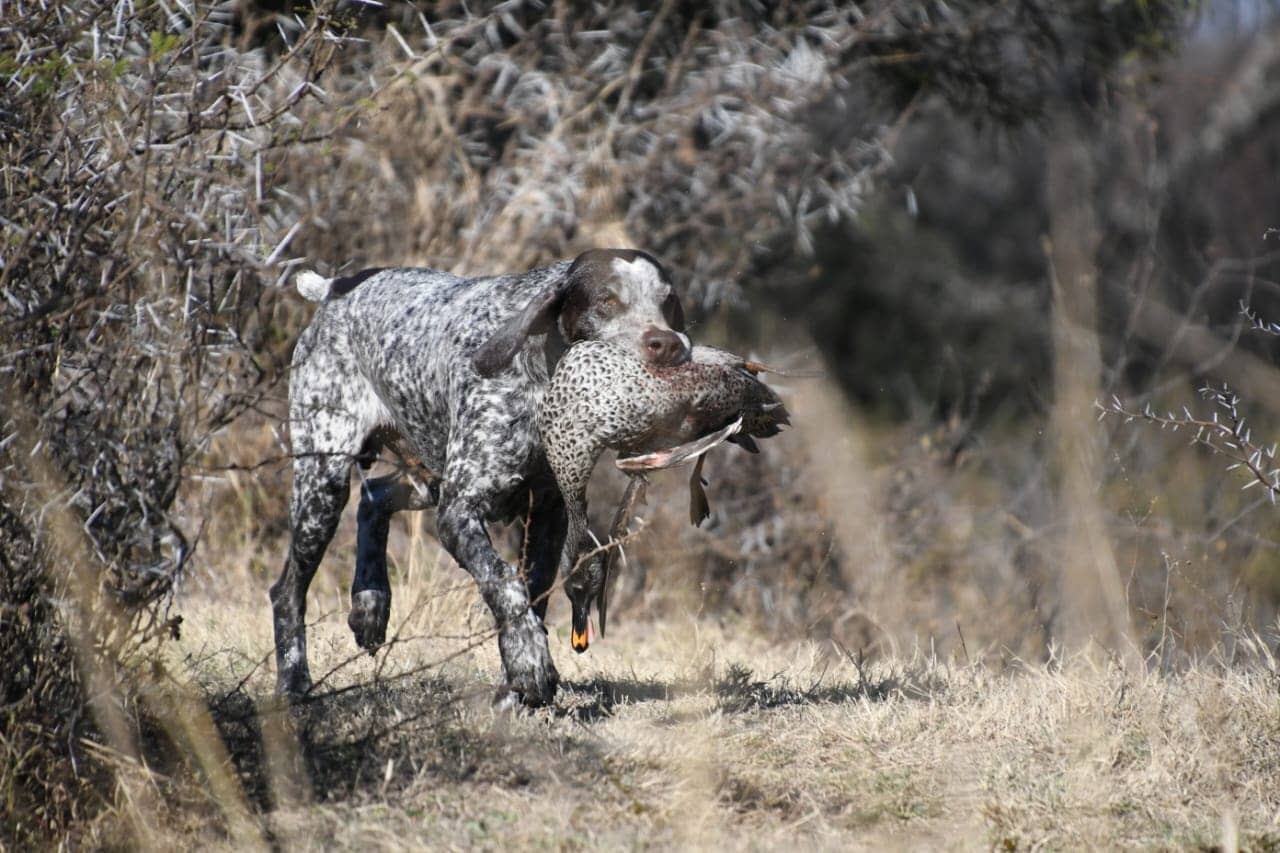
Why It Matters
A clean, willing retrieve later in a GSP's working life starts as a simple game much earlier. Rushing formal retrieve training before the dog loves the game itself tends to produce a reluctant or sloppy retriever.
Play retrieve keeps repetitions few, enthusiasm high, and the object of the game simple: pick up, return, deliver willingly.
The Principle
Pick up → return → deliver willingly.
How To Do It
- Use a soft dummy or toy, never anything that could injure the mouth.
- Work in an enclosed, low-distraction space at first — a hallway or small garden area.
- Keep throws short so success comes quickly and often.
- Stop each session on genuine enthusiasm, well before the dog loses interest — few repetitions, high energy.
- Reward the full sequence, especially a willing delivery back to hand, rather than just the chase and pickup.
Common Mistakes
- Running too many repetitions in one session, which kills enthusiasm.
- Using hard or unsuitable objects that discourage a soft mouth.
- Chasing the dog to get the object back — this teaches keep-away, not delivery.
- Skipping this playful stage and moving straight to formal, structured retrieve drills.
When To Move On
Once the dog reliably picks up, returns and releases the object to hand in a low-distraction setting, you're ready to build a more structured retrieve — see Building a Clean Retrieve.
Record This In HOUND
Skill: Retrieve foundations · Session notes · Progress
Early retrieve sessions can be logged as Training progress against your GSP's record, ahead of any formal Field + Performance entries.